Over the last few months, several publications where I was involved were published.
In August 2025, the GReG consortium published an overview of the project and how it will advance subterranean conservation (Subterranean Biology 53: 31–40).
In September 2025, we published results from our groundwater project highlighting the importance of karstic aquifers for the past and future survival of groundwater amphipods (Diversity and Distributions 31(9): e70063).
In October 2025, I and few colleagues published an opinion paper on how to accelerate the scientific description of invertebrate cryptic species (Biology Letters 21(10): 2025038).
In November 2025, we published an article on diversity patterns of groundwater amphipods in the Western Balkans and how local the diversity patterns are (Journal of Biogeography: e70100).
Our international collaborative team in the Biodiversa funded project DarCo has published a perspective paper in npj biodiversity. Subterranean ecosystems, consisting of terrestrial, semi-aquatic, and aquatic components, face increasing threats from human activities, and existing surface-protected areas are insufficient to safeguard their biodiversity. Establishing protected areas for subterranean ecosystems is hindered by technical challenges in mapping three-dimensional systems, the rarity and endemism of subterranean organisms, and the need for collaboration among multiple stakeholders with competing interests. Despite uncertainties, our paper emphasizes the timely and critical assessment of general criteria for subterranean biodiversity protection, advocating for their implementation based on precautionary principles and proposing solutions to enhance the coverage of subterranean ecosystems within European protected areas.
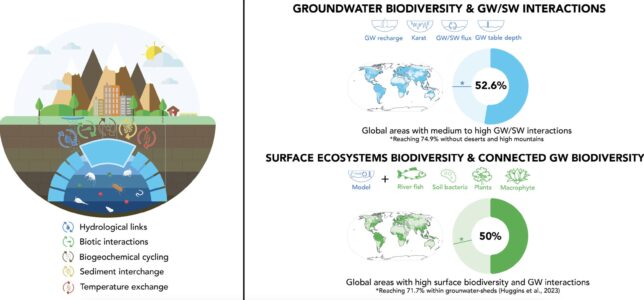
In an international collaboration published in Global Change Biology, we investigated the importance of groundwater as a key global ecosystem. Groundwater plays a central role in the global water cycle, harbors a unique biodiversity and provides important ecosystem services such as clean drinking water. However, it is under increasing pressure and is often neglected in nature conservation. Our assessments show that groundwater interacts with more than half of the land surface. It is therefore essential to recognize its interconnected nature and pursue holistic approaches to groundwater protection. We propose eight concrete steps for a scientific and political agenda to protect groundwater and combat the loss of its biodiversity.
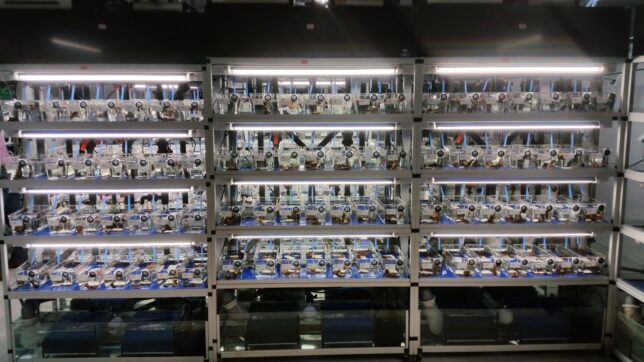
Flow through system at Eawag, used to keep Gammarus fossarum.
Being a field biologist by training, I always wanted to study my beloved amphipods under laboratory conditions. Turns out it is not as straightforward. Our recent publication in Science of The Total Environment highlights some of the things we learned over the last few years. While some amphipod species such as Hyalella azteca are easy to breed in captivity, the freshwater genus Gammarus from Central Europe is notoriously hard to keep and maintain in the lab. Hence, most experiments rely on wild-caught animals. From an scientific point of view, having lab-bred individuals available is the preferred option. To improve survival and reproduction in lab cultures of Gammarus fossarum, we caught thousands of G. fossarum and ran several experiments in our laboratory facilities, tweaking around with food supply, day-length, water temperature, cage size etc. We supplemented the diet of G. fossarum with protein-rich food and provided additional shelter. Both these measures increased survival rate of laboratory-based populations significantly, especially the feed enrichment. We also manipulated the day length (fixed vs. variable). We did not observe a significant effect of day length on the abundance and reproductive activity of G. fossarum. Apart from these main findings, we provide several detailed husbandry protocols in the paper (https://doi.org/10.1016/j.scitotenv.2022.158730). They are intended as starting point for future experiments in environmental sciences and ecotoxicology that rely on lab-bred G. fossarum. I want to thank everyone involved in improving our lab cultures of G. fossarum, especially Sarah Bollina, Eva Cereghetti, Morris Galli, Samuel Hürlemann, Silvana Kaeser, Chelsea Little, Manja Schleich and I want to acknowledge financial support by Eawag, University of Zurich, and BAFU.
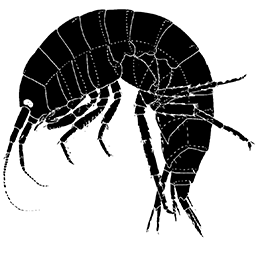
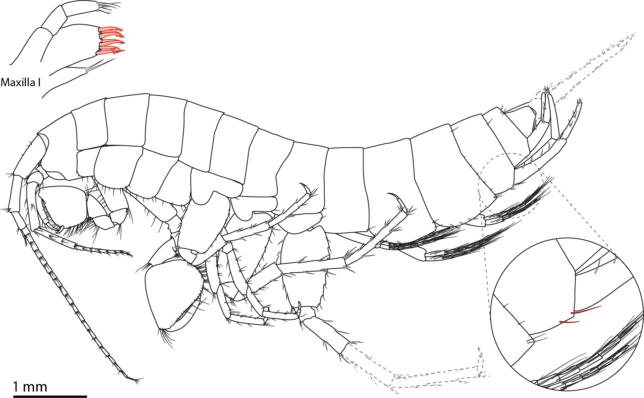
Niphargus arolaensis, a newly described groundwater amphipod from Switzerland
Thanks to the collaboration with many water well managers, Nicole Bongni was able to describe a previously undocumented biological diversity in groundwater in her master’s thesis. The focus was on amphipods, in particular the genus Niphargus. Among the discoveries was a completely new species, which we have now described scientifically in Subterranean Biology. The name of the new species: Niphargus arolaensis, the Aare groundwater amphipod. The name is derived from the fact that we have only been able to detect the species at three sites in the Aare River basin. This research shows that we still understand the groundwater habitat far too poorly and therefore cannot protect it adequately. Thanks to the project AmphiWell we can continue basic research on this topic.