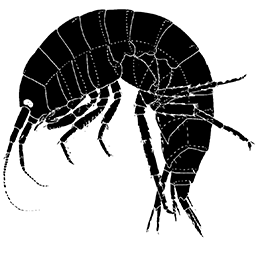
In the latest issue of Aqua & Gas, we have published an overview of our study results on groundwater fauna in Switzerland. In the article, we show that, on the one hand, greater protection of groundwater is necessary and, on the other hand, monitoring of groundwater biodiversity in Switzerland must be stepped up. The article can be read in German online: https://www.aquaetgas.ch/wasser/gew%C3%A4sser/20251204-ag12-die-grundwasserfauna-sch%C3%BCtzen/
Several new publications
Over the last few months, several publications where I was involved were published.
- In August 2025, the GReG consortium published an overview of the project and how it will advance subterranean conservation (Subterranean Biology 53: 31–40).
- In September 2025, we published results from our groundwater project highlighting the importance of karstic aquifers for the past and future survival of groundwater amphipods (Diversity and Distributions 31(9): e70063).
- In October 2025, I and few colleagues published an opinion paper on how to accelerate the scientific description of invertebrate cryptic species (Biology Letters 21(10): 2025038).
- In November 2025, we published an article on diversity patterns of groundwater amphipods in the Western Balkans and how local the diversity patterns are (Journal of Biogeography: e70100).
The global human impact on biodiversity
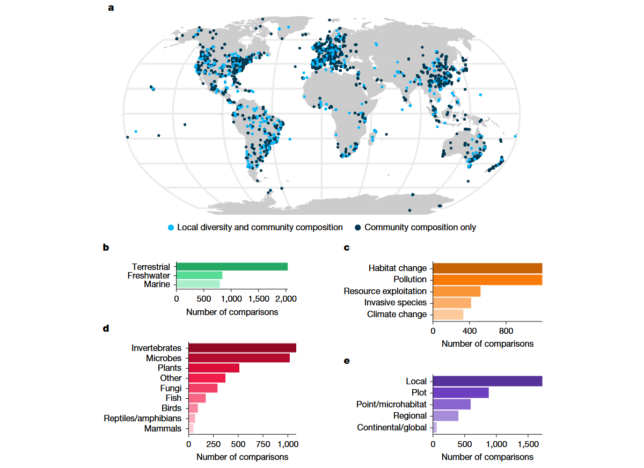
Human activities are significantly affecting biodiversity on a global scale. Beyond the decline in species numbers, the composition of entire species communities is undergoing profound changes. In our study, published in Nature, we highlight these shifts. Our research stands among the most extensive studies ever conducted on the subject.
- Keck, F., Peller, T., Alther, R. et al. The global human impact on biodiversity. Nature (2025).
https://doi.org/10.1038/s41586-025-08752-2 ↩︎
Co-occurrence and sympatry patterns of Niphargus rhenorhodanensis
Cryptic freshwater species contribute to biodiversity, but their community integration remains unclear. In a recent study published in Freshwater Biology, we examined local and regional co-occurrences of cryptic amphipod species to understand the role of phylogenetic relationships in shaping biodiversity patterns. Our findings suggest that regional overlap results from dispersal rather than phylogenetic relatedness, with sympatries occurring more frequently among species from different clades. Ultimately, spatial patterns reflect historical events like mountain formation and climatic shifts, influencing biodiversity at local and regional scales.
Leaf litter processing by amphipods under laboratory and natural conditions is density-dependent

The processing of organic matter in freshwater ecosystems is crucial for integrating terrestrial plant material into aquatic food webs, with many systems depending on allochthonous inputs. In a study published in Oikos (https://doi.org/10.1111/oik.10774) we investigated how the population density of native and non-native amphipods (Gammarus fossarum and Gammarus roeselii) affects leaf litter processing, revealing a negative density-dependent relationship in both laboratory and field experiments. Interspecific competition confirmed functional redundancy between the species and showed that processing rates plateau at defined breakpoints, which reflect minimal metabolic needs. The findings emphasize the importance of accounting for nonlinear density-dependencies and breakpoints in aquatic ecosystem models, as population density significantly impacts ecosystem functions.